
Social Evils in the Name of Culture: An Intellectual Dialogue at Mukabbir University
“Tradition should empower, not imprison.” This definitive statement set the tone for an intellectual, high-impact dialogue held at Mukabbir University of Science & Technology. Organized by the English Department seminar committee, the event titled “Social Evils in the Name of Culture” brought together academic minds to challenge entrenched societal oppressions.
The seminar served as an open arena for stripping away the defense of “heritage” from violent crimes, looking closely at systemic issues like child marriage and honour killing, gender bias, and human exploitation.
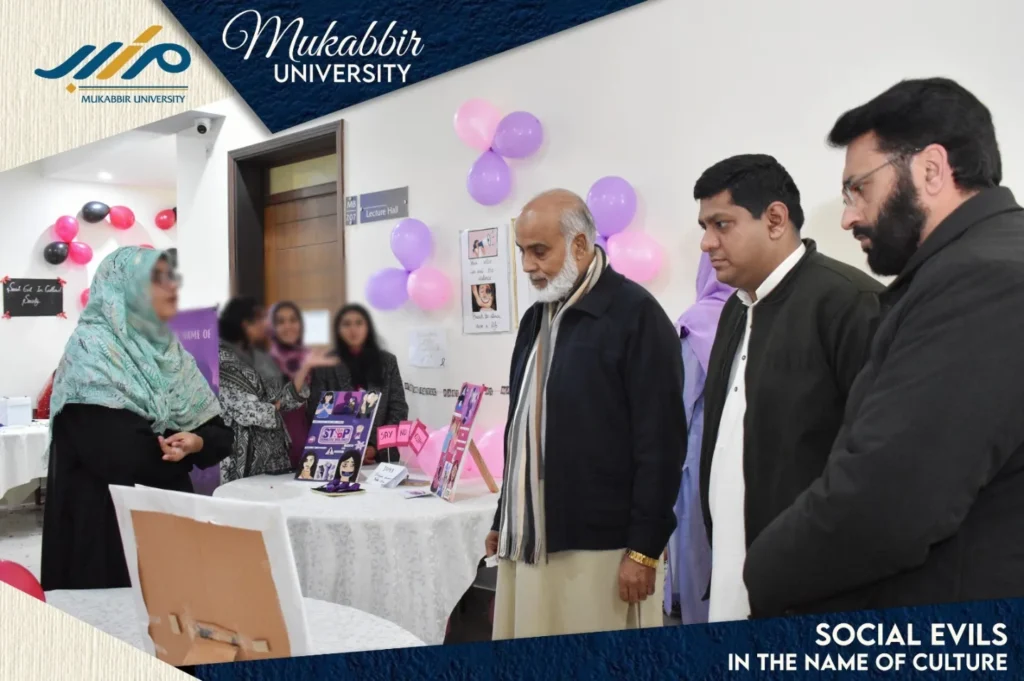
Dr. Rida Irfan Calls for Academic Courage in Combating Social Tyranny
The seminar opened with a powerful keynote address by the Chief Guest, Dr. Rida Irfan (Director Academics). Dr. Irfan praised the English Department for steering academic discourse toward uncomfortable yet vital structural issues. She emphasized that institutional research must play an active role in combating social tyranny.
“We cannot change what we refuse to confront. Challenging harmful norms requires academic courage, rigorous research, and a willingness to stand against institutionalized discrimination cloaked as heritage.” — Dr. Rida Irfan, Director Academics
Dr. Irfan explained that universities are not passive landscapes for learning facts, but active catalysts designed to rewrite societal narratives.
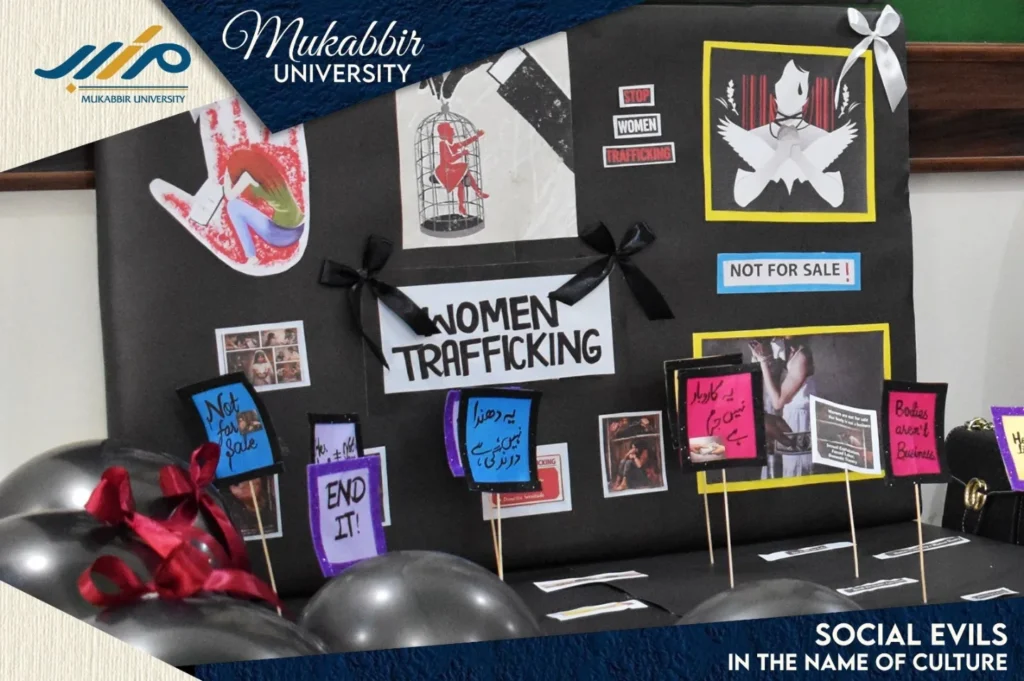
Deconstructing the Realities of Social Evils in the Name of Culture
The core of the event focused on how criminal acts are frequently hidden behind the shield of traditional preservation. Student analysts and expert panel members from Mukabbir University of Science & Technology dissected how communities use historical customs to justify human rights crises.
Why We Must Confront Social Evils in the Name of Culture
To understand the depth of the issue, the panel broke down four critical areas where systemic violence is falsely categorized as traditional heritage:
- Honour Killing: The panel addressed how patriarchal structures distort the concepts of family honour and respect to justify homicide. Speakers argued that honour killing is a violent manifestation of control over women’s choices, sustained by community silence.
- The Rising Crisis of Women Trafficking in Pakistan: Often masked as fraudulent employment opportunities or forced cross-border alliances, women trafficking in Pakistan remains a severe underground industry. The dialogue tracked how economic vulnerabilities are manipulated under traditional guises.
- Child Marriage: Marrying off young girls before they reach physical or psychological maturity was defined as a systemic malpractice. The seminar highlighted how child marriage directly truncates a woman’s education and compromises maternal health.
- Normalizing Domestic Abuse: When domestic violence is brushed aside as a private family matter, culture becomes complicit. The seminar called out the linguistic and social structures that normalize day-to-day physical and psychological coercion.
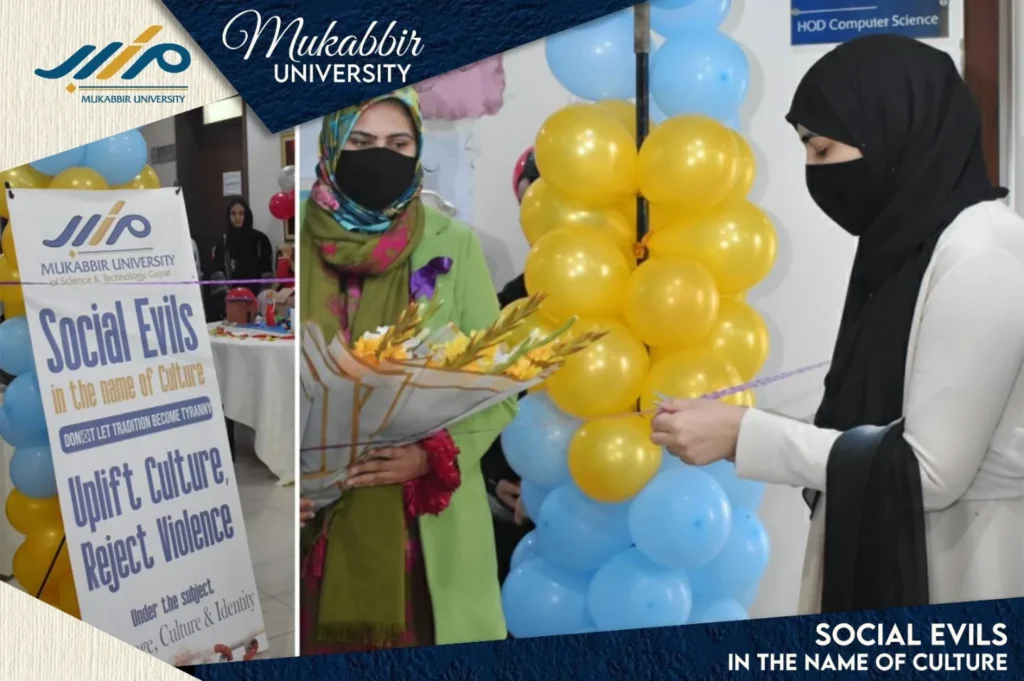
The Role of the English Department in Driving Social Change
Why is an English Department seminar the right place to unpack human rights violations? The student presenters beautifully highlighted that literature and language are the primary vehicles through which culture is formed, maintained, and broken.
By analyzing narratives, deconstructing rhetoric, and writing counter-narratives, young scholars can dismantle the specific vocabularies that justify oppression. The pen remains a primary tool to challenge systemic injustice.
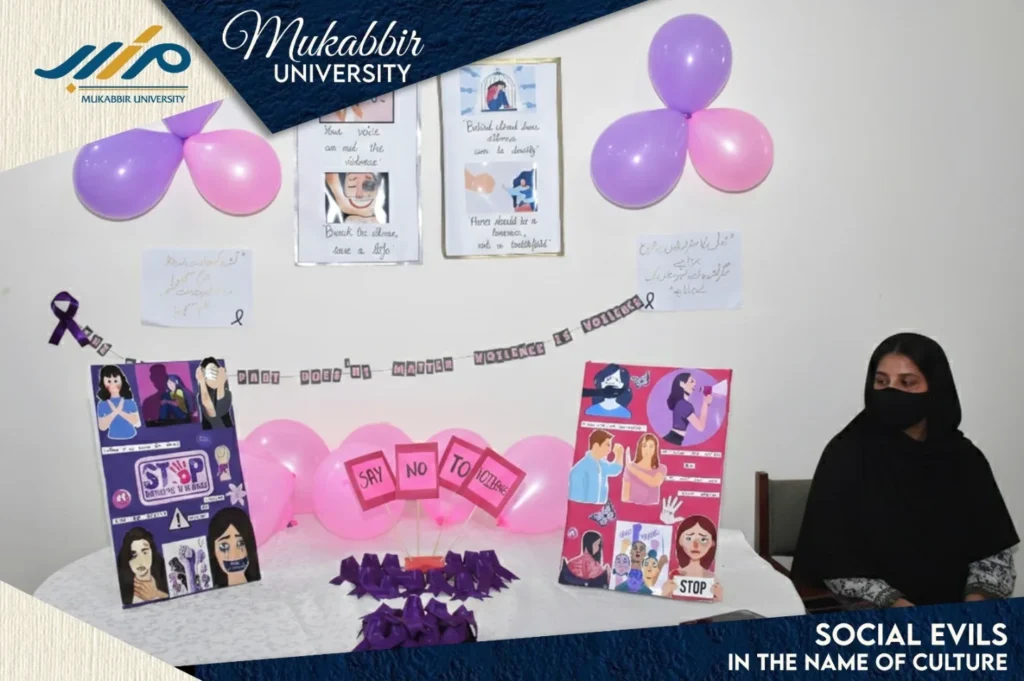
The Mission Continues: Beyond the Walls of Mukabbir University
The seminar has officially concluded, but the actionable framework created at Mukabbir University continues to move forward. The event established a student-led task force dedicated to translating these academic concepts into sustainable community action.
To maintain momentum, the university is establishing several initiatives:
- Community Education Outreaches: Moving the discussion from lecture halls directly into rural sectors to educate families on the legal age of marriage and women’s statutory rights.
- Empirical Research Papers: Directing undergraduate literature and linguistics theses toward documenting and resolving regional biases.
- Institutional Support Alliances: Forming direct channels with local legal aid groups and human rights NGOs to provide protection assets for vulnerable individuals.
True progress demands that we stop using culture as an excuse for cruelty. Mukabbir University has drawn a clear line: if a tradition requires the destruction of human dignity, it is not culture ,it is crime.
For more details , Contact us .